Case study 01
CardFlow
CTO & Co-Founder
CardFlow is a trading card marketplace built around real demand: buyers post FlowOrders, standing bids for the exact card and condition they want, and sellers fill them. CardFlow Pro builds on that marketplace as an AI-powered sourcing platform for high-volume card shops. As CTO and Co-Founder, I lead product, engineering, architecture, design, and AI development.
- Role
- CTO & Co-Founder
- Platforms
- Mobile app, web, admin, API
- Stack
- React Native, Next.js, Django, PostgreSQL
- Status
- Live marketplace · Pro in closed beta
02 · Problem & context
Trading cards are easy to want and hard to trade with confidence.
Card prices move quickly, and the same card can be worth very different amounts depending on its printing, condition, and grade. Buyer and seller have to agree on exactly what is changing hands before any money moves.
Peer-to-peer trades often depend on trust: one side pays or ships first and hopes the other follows through. CardFlow set out to make demand visible and transactions safe, so collectors can trade with strangers without taking that leap.
- 01
Precise demand
A card is only comparable to another of the same printing, condition, or grade. Listings alone don't show what buyers actually want, or what they'll pay.
- 02
Trust between strangers
Buyers need to know they'll receive the card they paid for. Sellers need to know they'll be paid once it arrives.
- 03
Fulfillment across price points
Some cards sell for a few dollars and others for hundreds. Shipping and payouts had to make sense across that whole range.
03 · My role
From client engagement to CTO and co-founder.
CardFlow began as client work. As the product took shape, the relationship grew into a co-founder partnership, and I took on the product and its technology end to end.
As CTO, I lead product, engineering, architecture, design, and AI development: the React Native app, the Next.js web applications, the Django and PostgreSQL backend, the infrastructure that runs them, and the AI behind Nori and card-condition assessment.
- 01
Product strategy
Shaped the marketplace around buyer-initiated FlowOrders, then led its expansion into CardFlow Pro, AI-powered sourcing for high-volume card shops.
- 02
UX and interface design
Designed the buying, selling, scanning, and order flows across mobile and web, from first sketch to production.
- 03
Mobile and web
Led development of the React Native / Expo app and the Next.js applications: the marketplace, buyer and seller dashboards, CardFlow Pro, and the admin console.
- 04
Architecture, backend, and infrastructure
Led the system architecture: the Django REST API on PostgreSQL, the Stripe and shipping integrations, and the containerized deployment on AWS.
- 05
AI development
Led development of Nori, an AI copilot for professional buyers, and built a custom PyTorch model for card-condition assessment from data I collected and labeled.
Stack
- React Native
- Expo
- TypeScript
- Next.js
- Tailwind CSS
- Django
- Django REST Framework
- PostgreSQL
- Redis
- Stripe Connect
- EasyPost
- Docker
- AWS
- GitHub Actions
- PyTorch
04 · Engineering & product decisions
Designing for demand, trust, and safe payouts.
Most of the core decisions served one goal: make a trade between strangers feel safe for both sides without slowing it down.
- 01
Buyers lead with FlowOrders
A FlowOrder is a buyer's standing bid for a specific card, condition, or grade at a set price. Sellers see real demand and fill it directly, instead of buyers waiting for the right listing to appear.
- 02
Funds are committed before anyone ships
Placing a FlowOrder authorizes the buyer's card through Stripe without charging it. Payment is captured only when a seller's offer is accepted, so sellers know the money is there and buyers aren't charged without a match.
- 03
Trust is earned, not assumed
Sellers submit photos of the actual card. Offers from verified sellers are accepted automatically; others go through a review queue, so new sellers can trade without lowering the bar.
- 04
Shipping is part of the order
When an offer is accepted, the shipping label is purchased automatically through EasyPost, and carrier tracking moves the order from shipped to delivered without manual updates.
- 05
Payouts wait for confirmed delivery
Seller payouts through Stripe Connect are scheduled 48 hours after the carrier confirms delivery, so funds stay protected until the card has actually arrived.
- 06
Private inventory, public demand
CardFlow Pro matches a professional's private inventory against live FlowOrders. Their stock is never exposed as public supply, but they can see exactly what they could sell today.
- 07
An AI copilot that never spends
Nori turns plain-language buying intent into draft procurement plans for CardFlow Pro. It parses requests with a fixed grammar first and falls back to an LLM only when needed, and it never places orders on its own: a person always publishes.
Clients
- Mobile appReact Native · Expo
- Web marketplace & Pro deskNext.js
- Admin consoleNext.js
API
- REST APIDjango · Django REST Framework
- Live alertsDjango Channels · WebSockets
Data & jobs
- PostgreSQLPrimary database
- RedisChannels layer
- Scheduled jobsPayouts, expirations, shipment sync
Services
- Stripe ConnectHolds, captures, seller payouts
- EasyPostLabels and tracking
- Card scanningThird-party identification API
- Pricing & catalog dataMarket prices, card catalogs
Infrastructure
- Docker on AWSEC2, ECR, S3
- GitHub ActionsBuild and deploy
- CloudflareWeb hosting
Mobile and web share one REST API. Background work runs as scheduled jobs.
- 01CollectGathered card images to learn from.
- 02LabelLabeled the condition data myself.
- 03TrainTrained a custom computer vision model in PyTorch.
- 04EvaluateReviewed predictions by hand: 93% accuracy reported.
The 93% figure comes from my own manual evaluation. It is not an independently verified benchmark.
05 · Product showcase
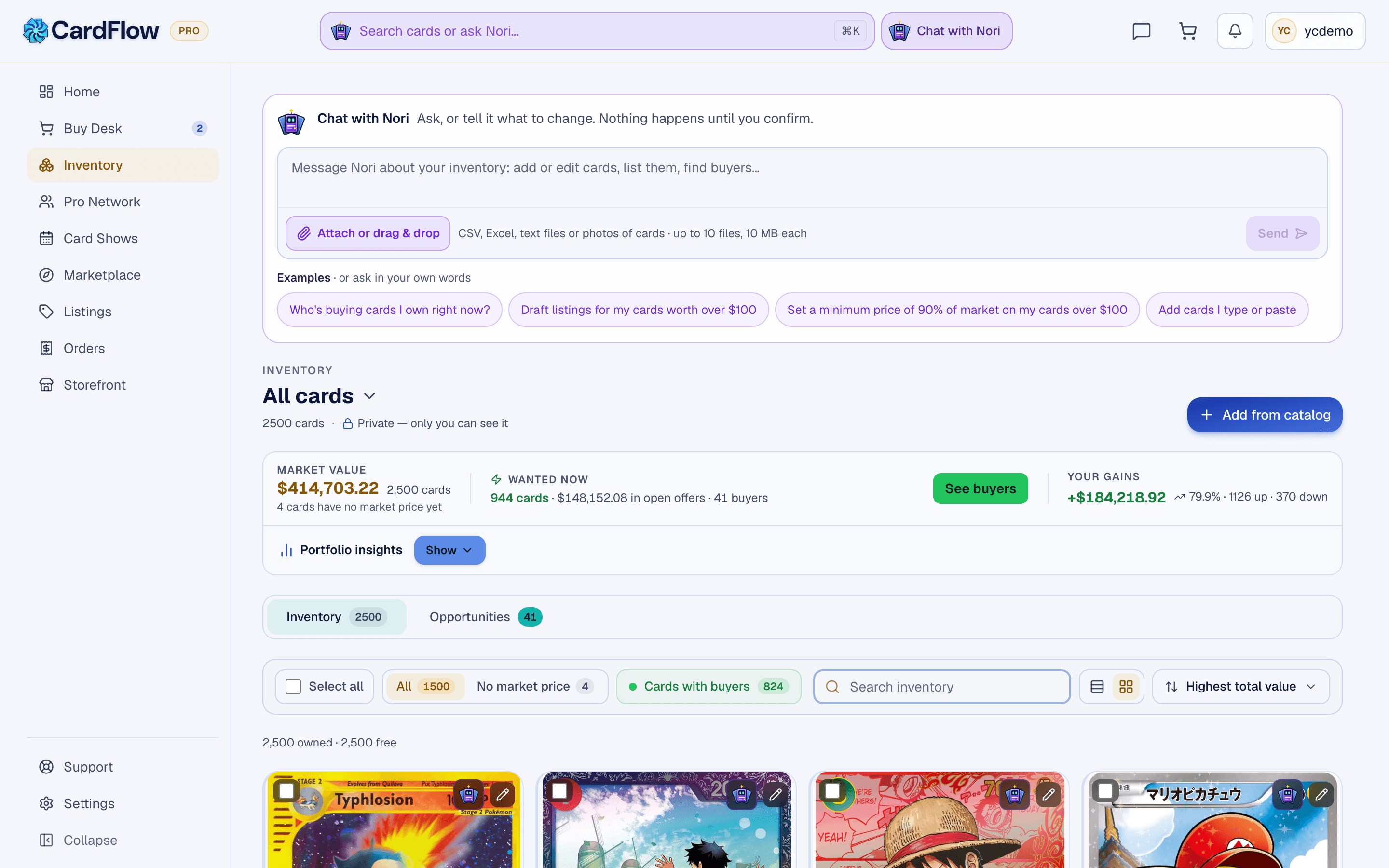
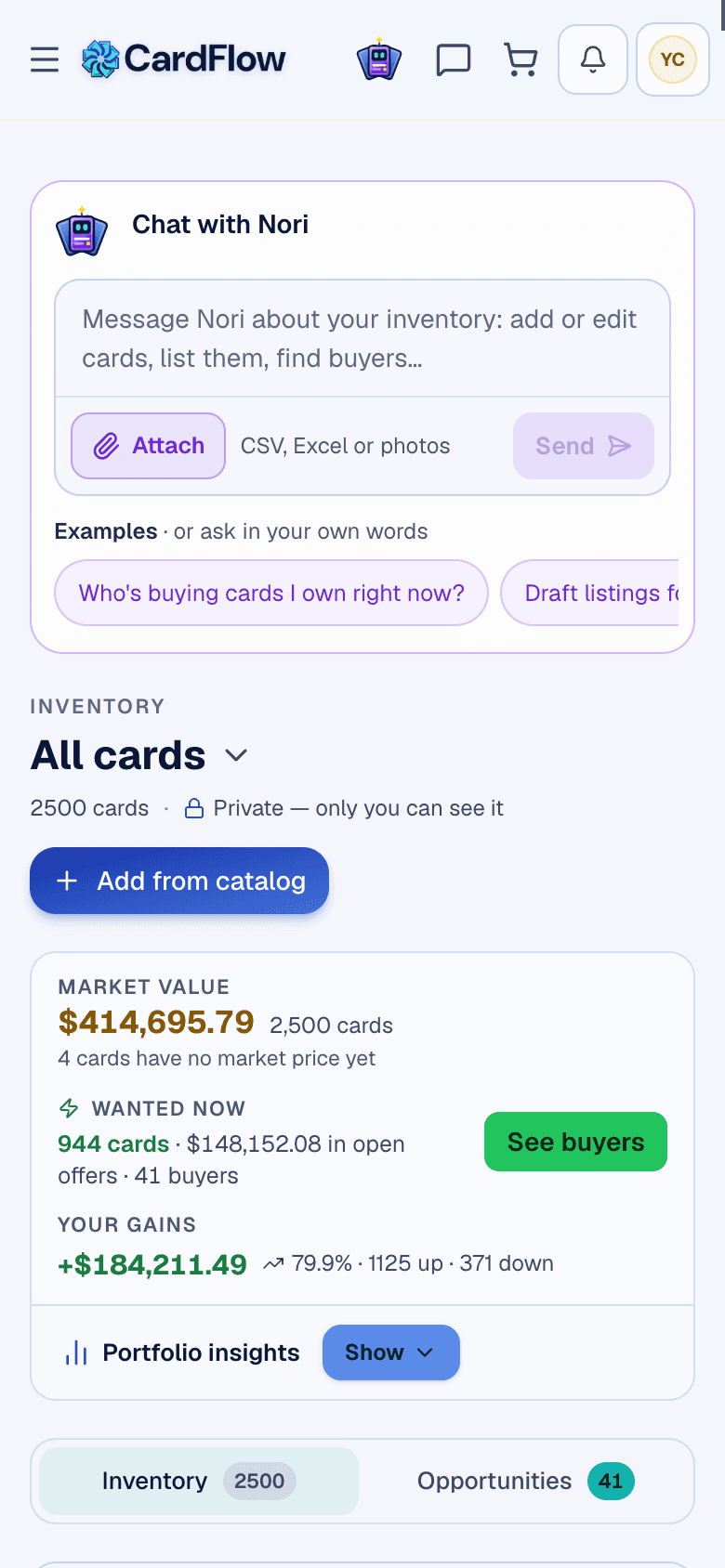
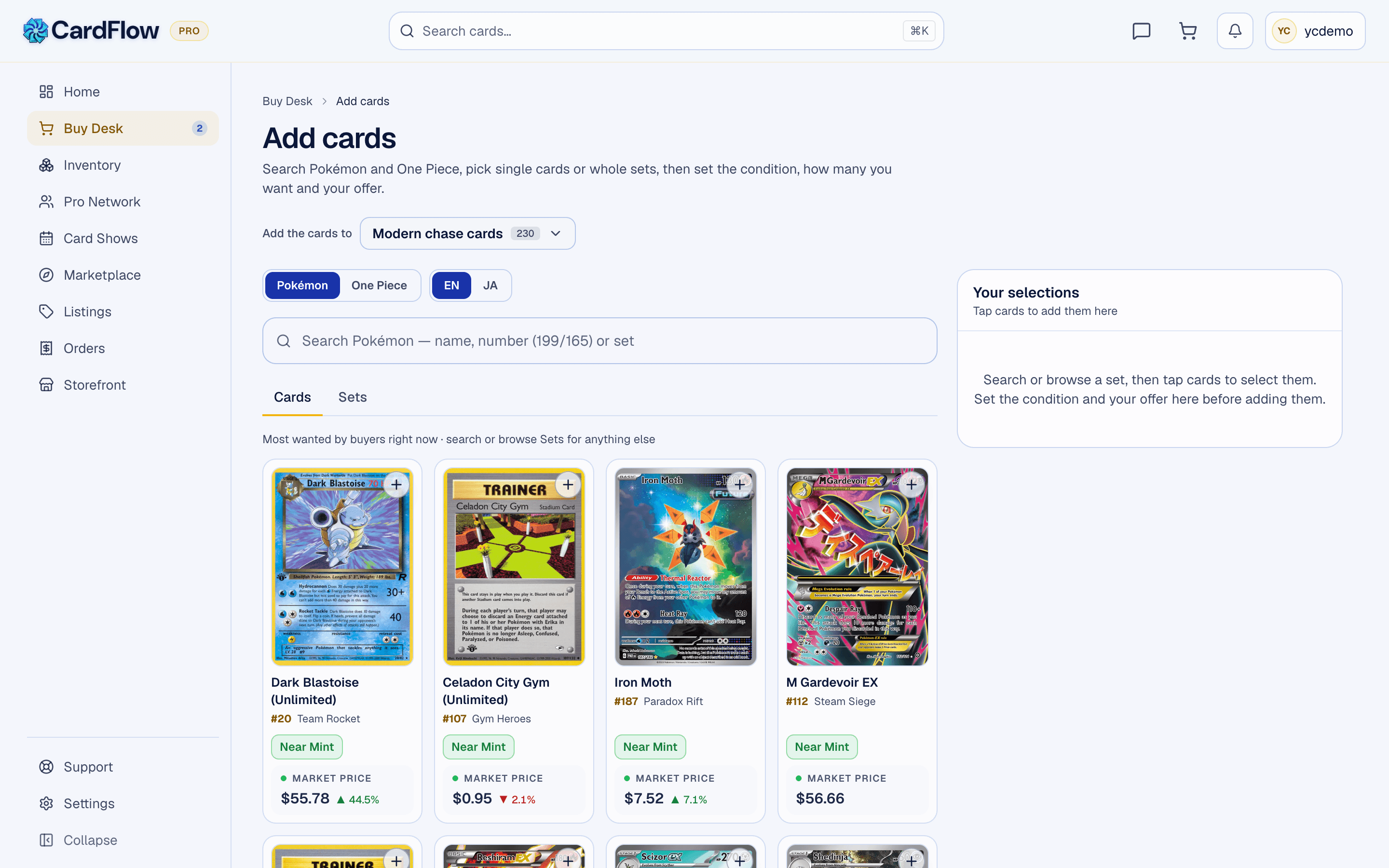
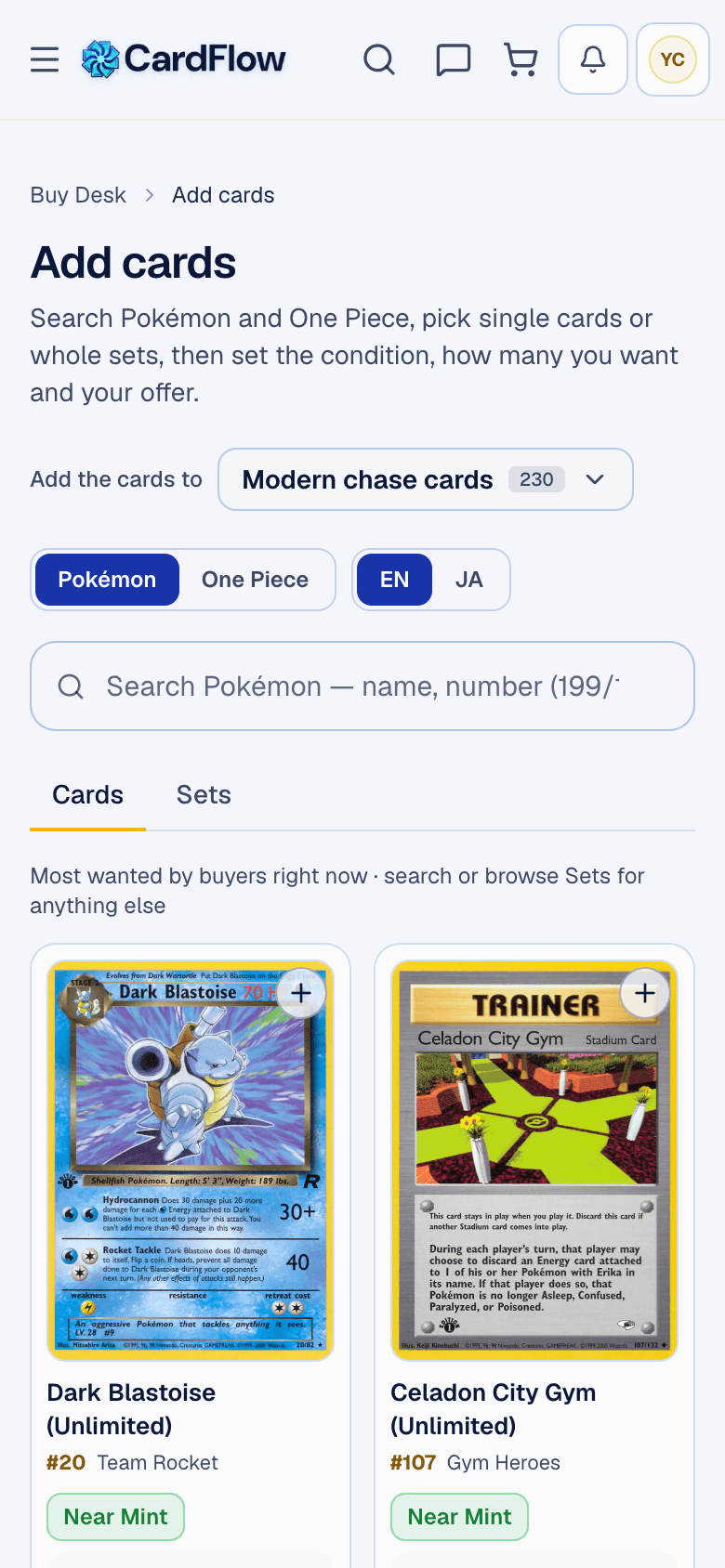
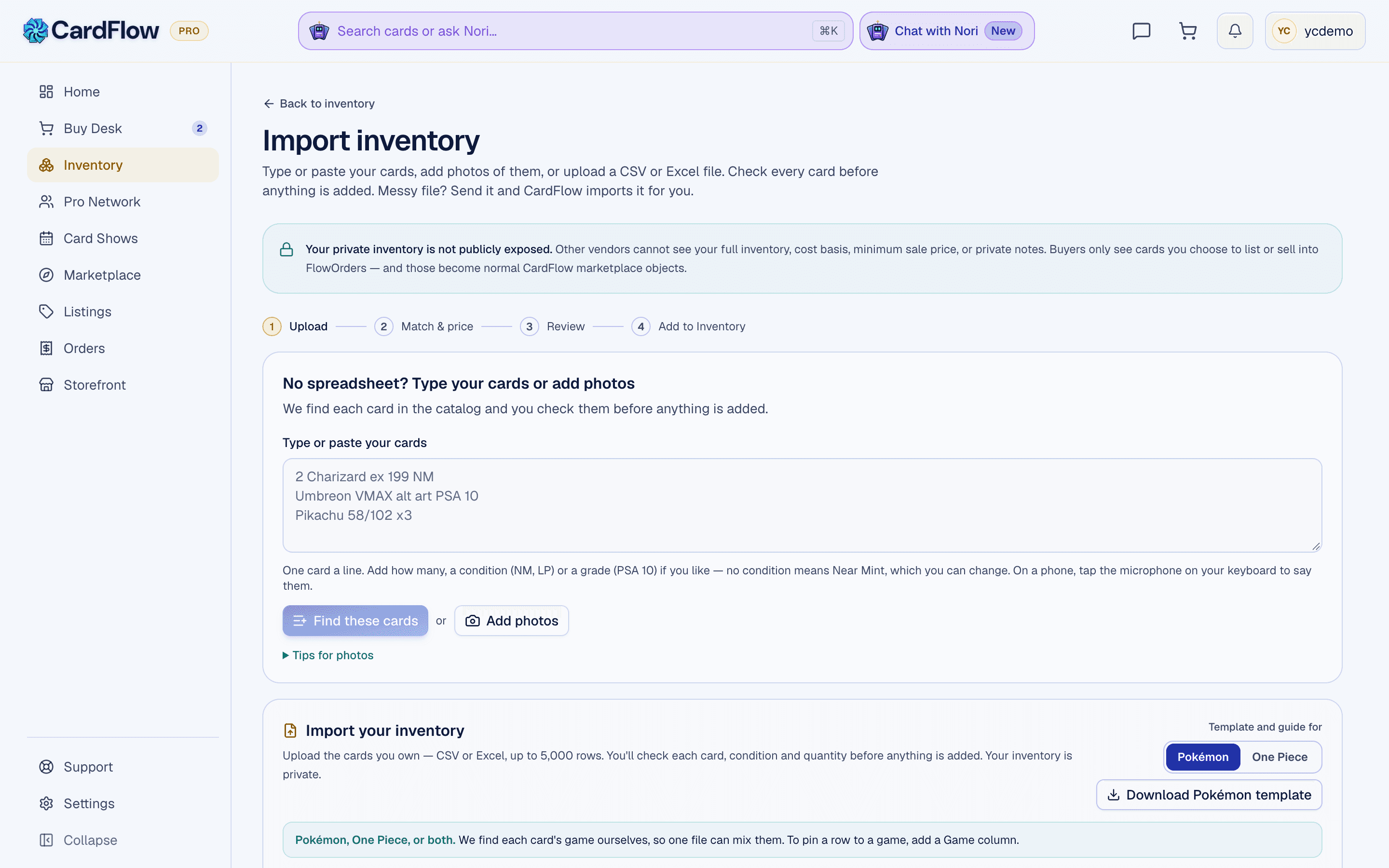
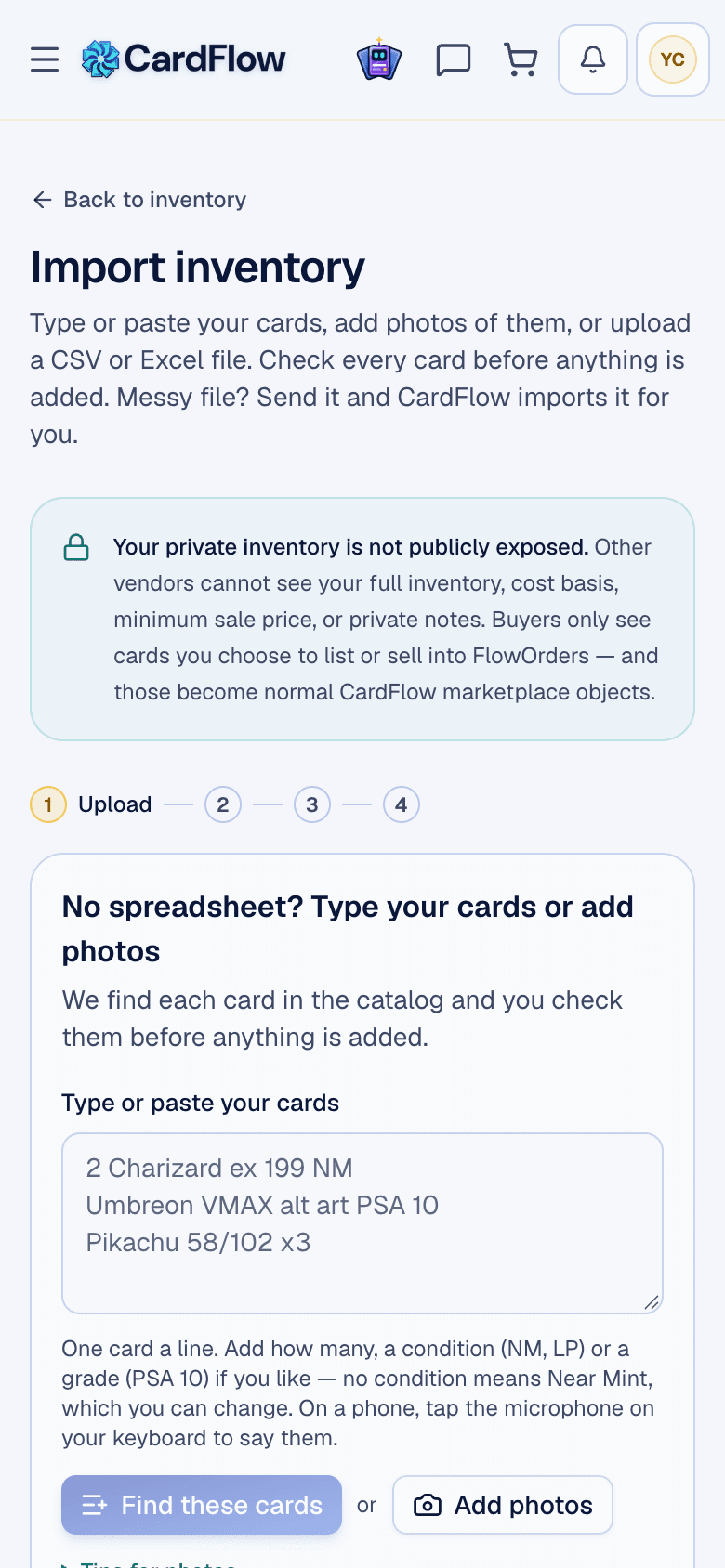
CardFlow Pro: AI-powered sourcing for high-volume card shops.
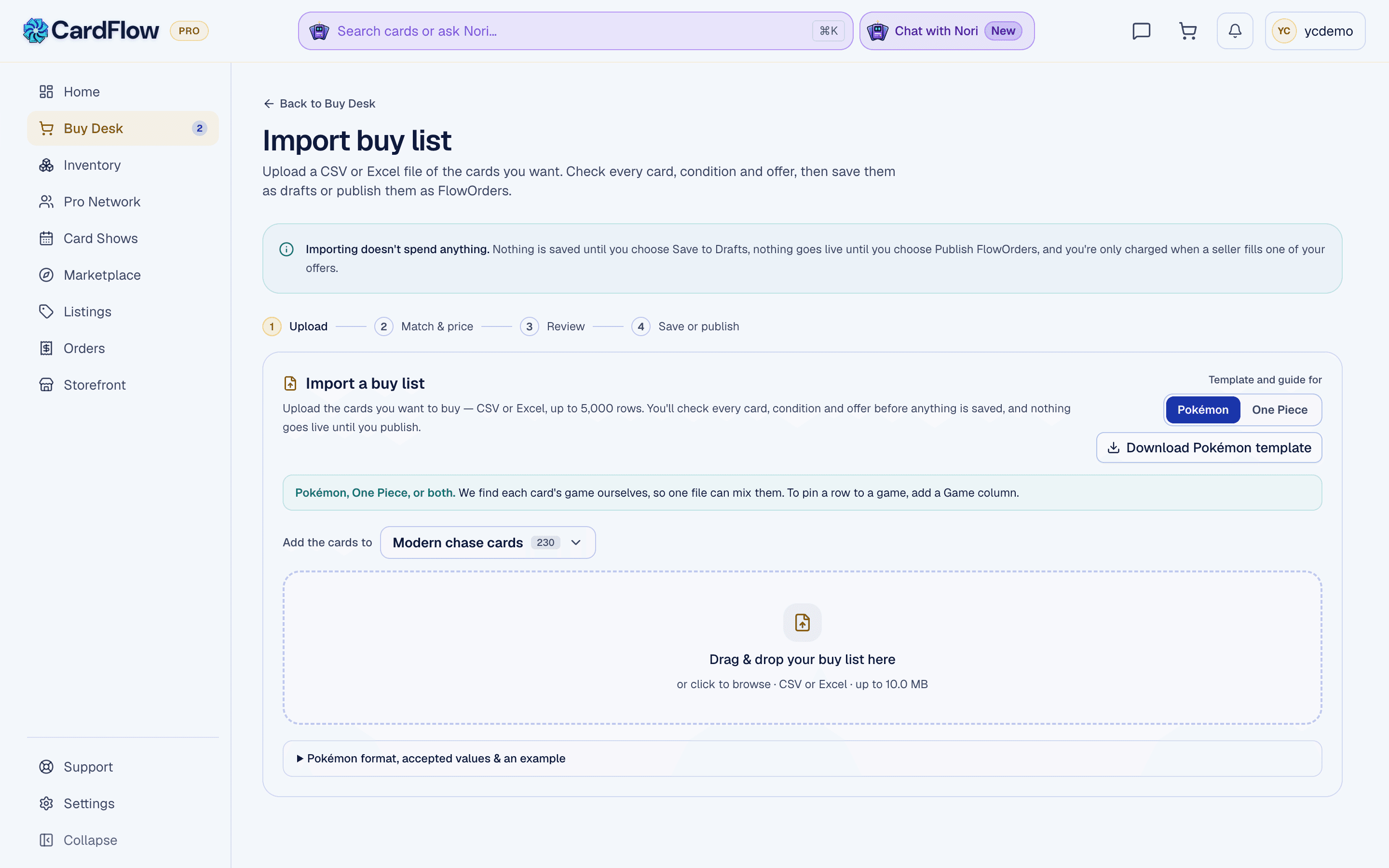
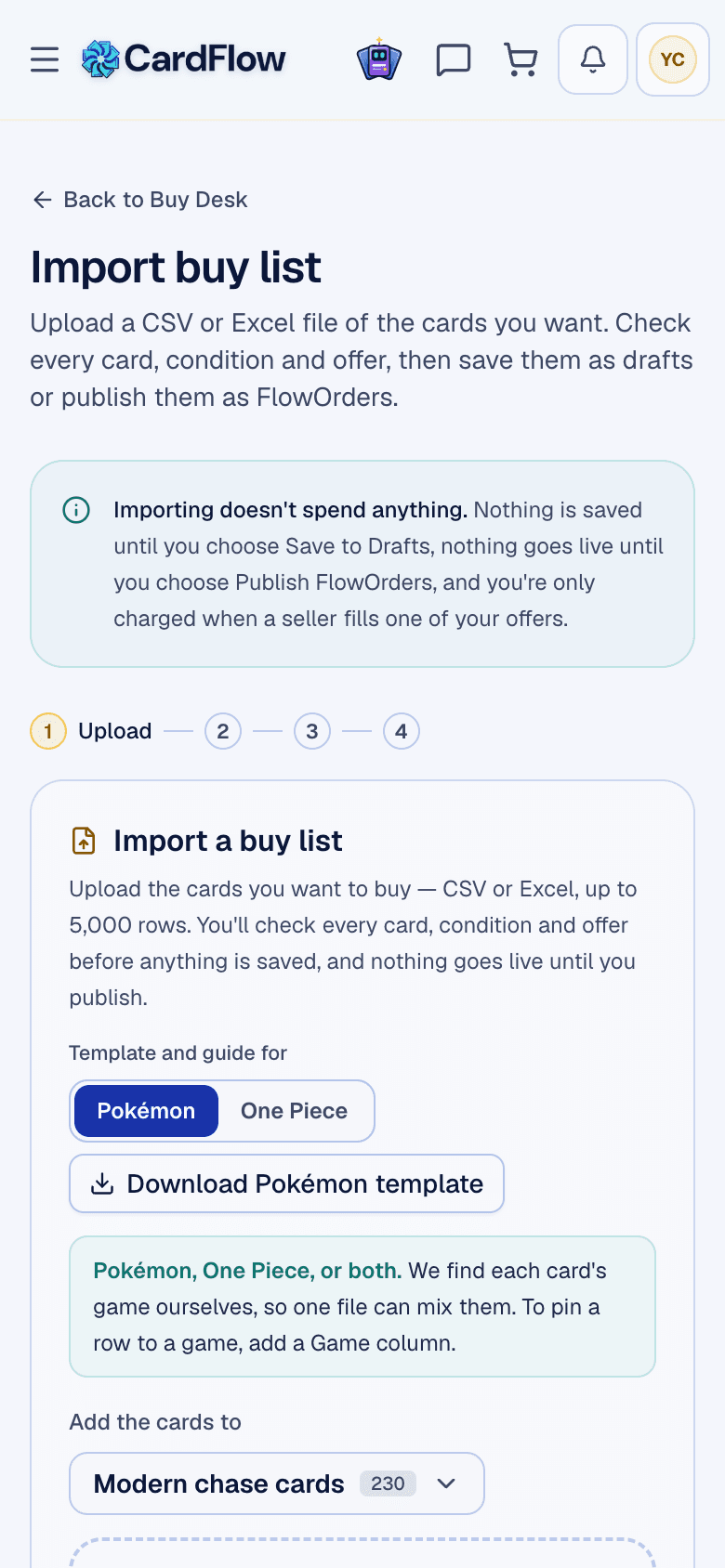
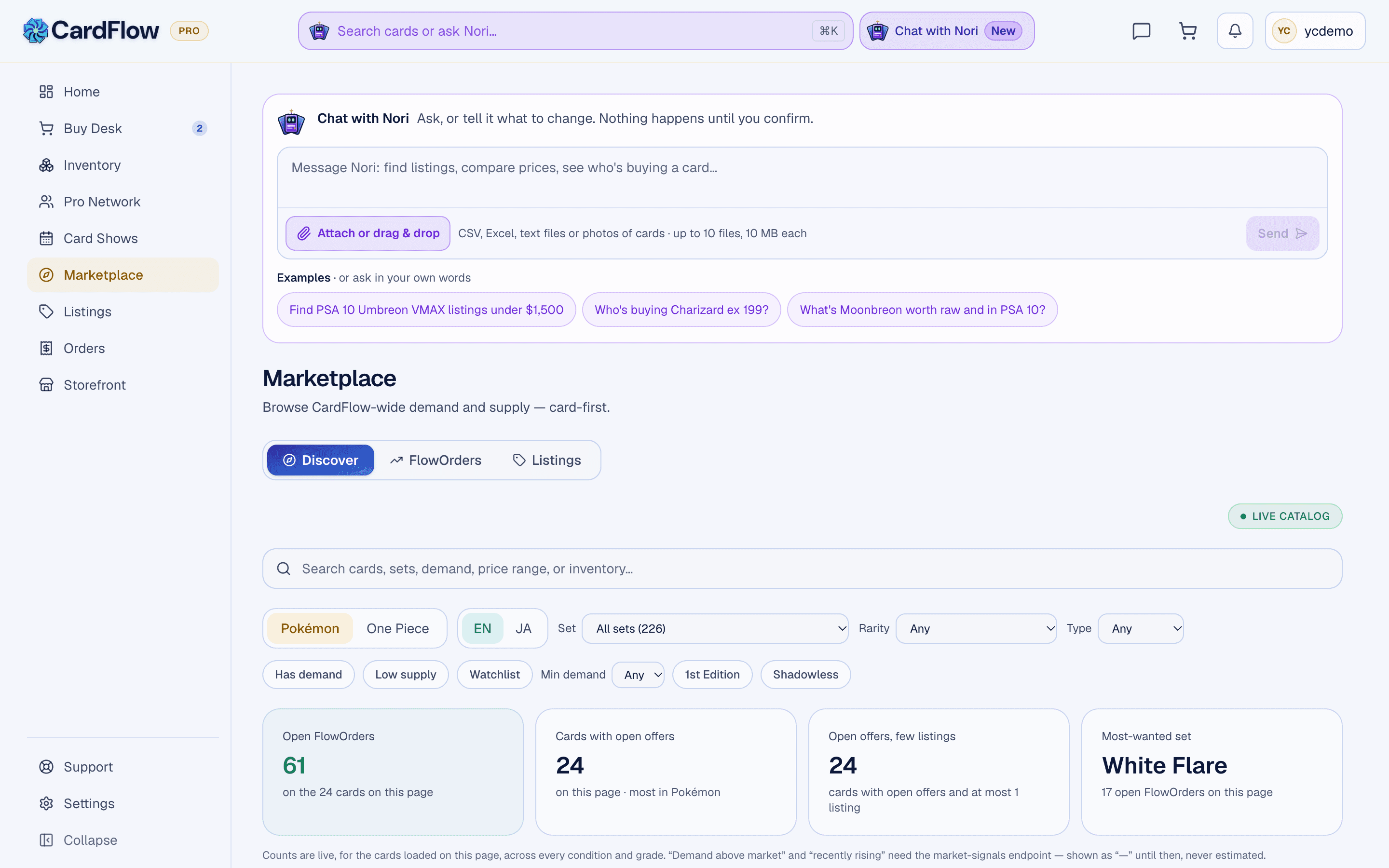
Card shops, vendors, and breakers buy and sell in volume, and every card is priced by its printing, condition, and grade. CardFlow Pro is built for that scale: private inventory valued against live demand, buy lists that go live as standing bids, and Nori, an AI copilot on every page that turns plain-language requests into drafts a person approves. Pro is in closed, invite-only beta.
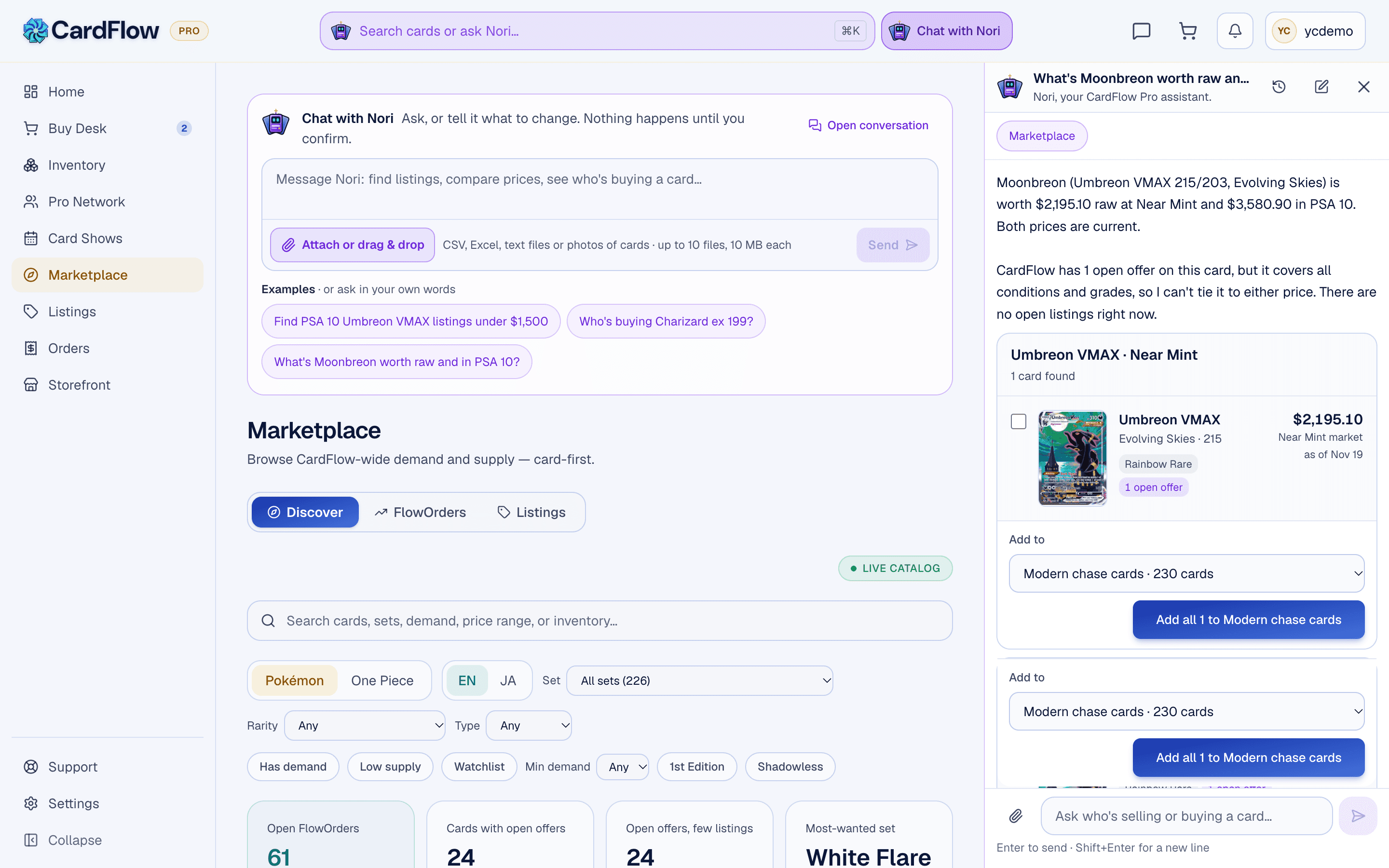
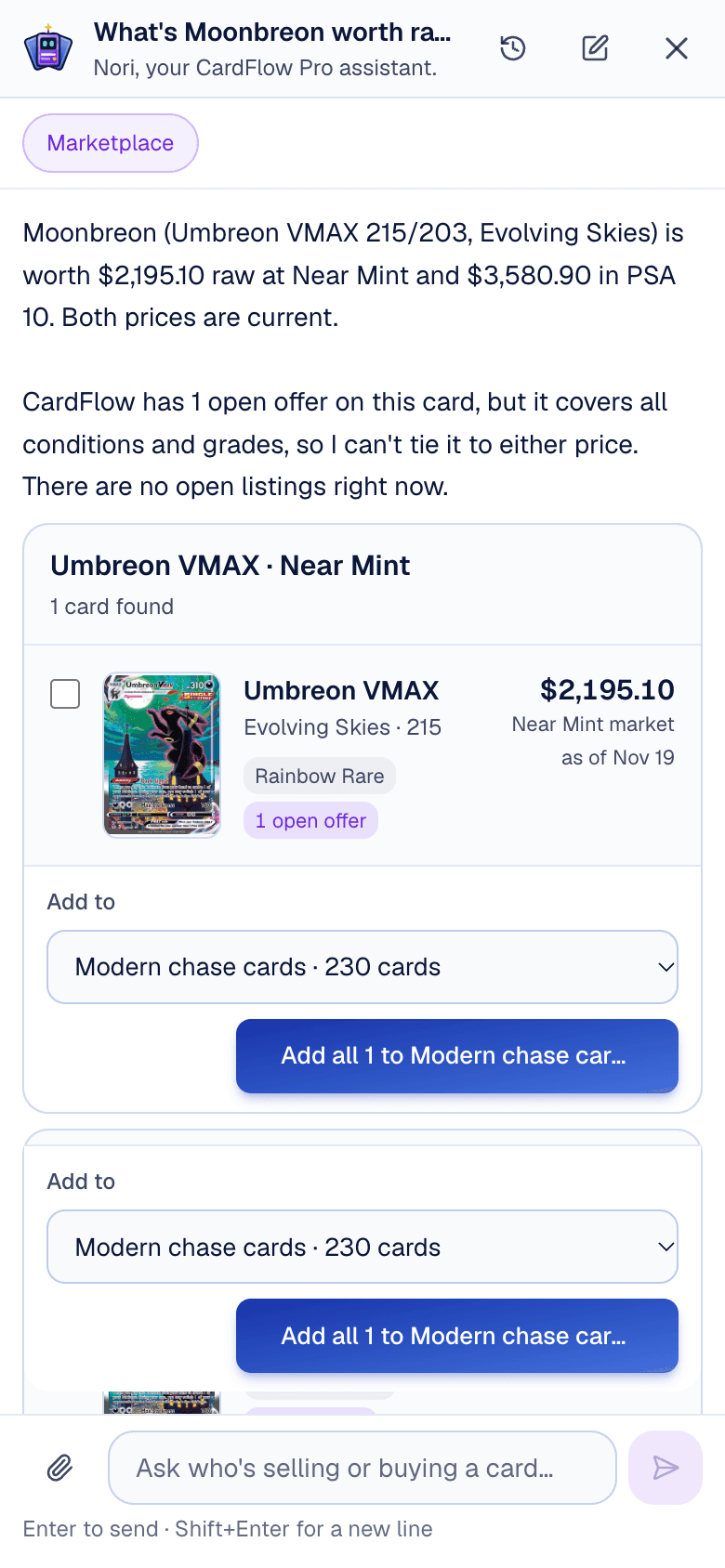
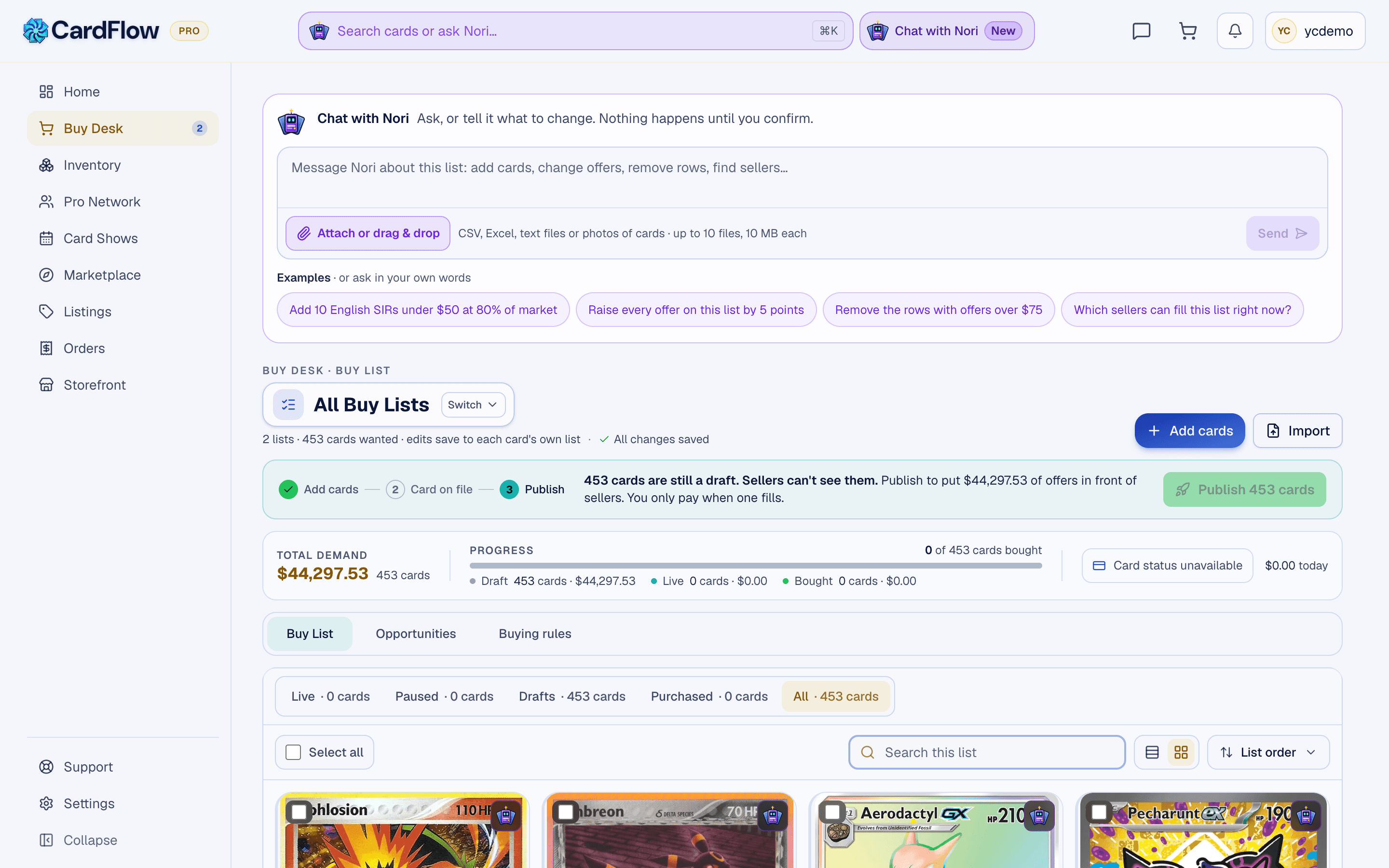
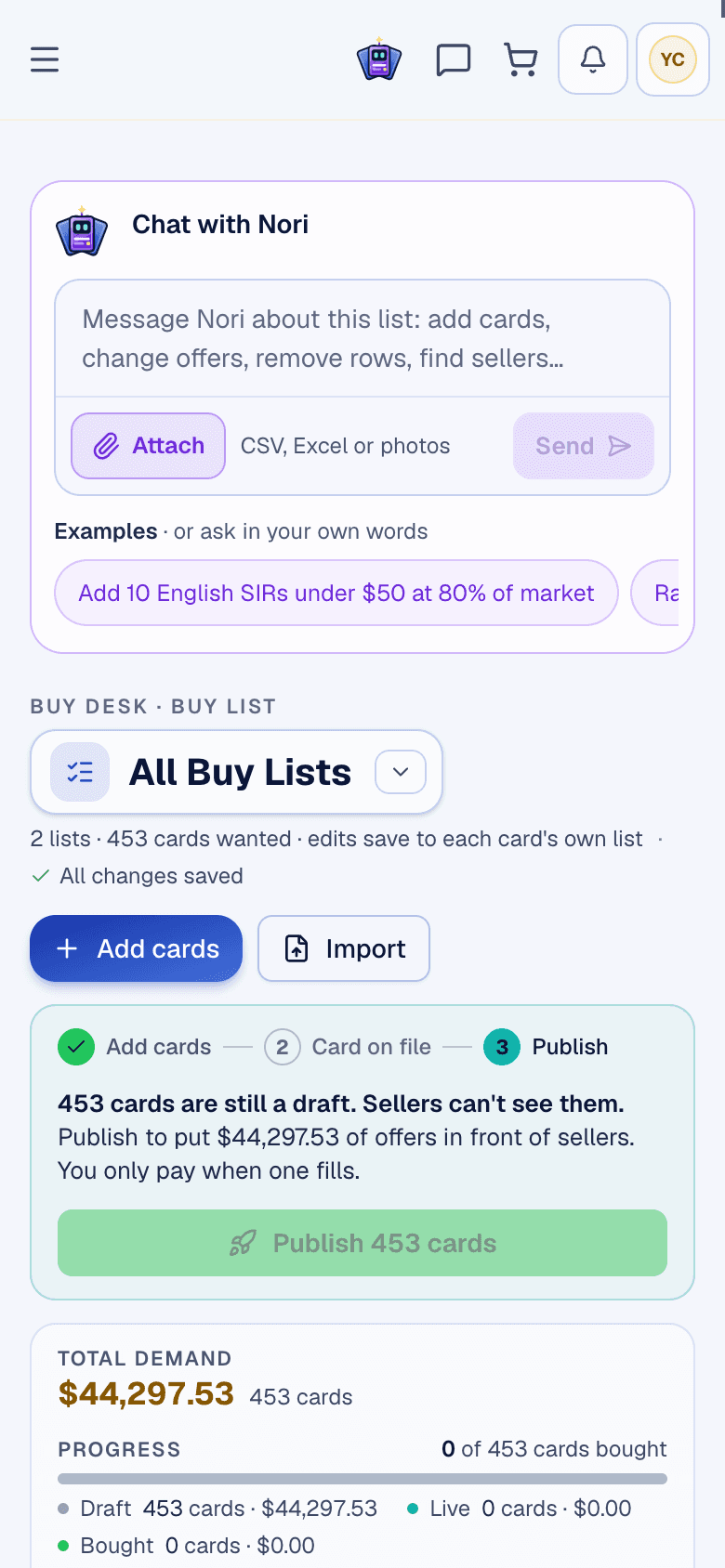
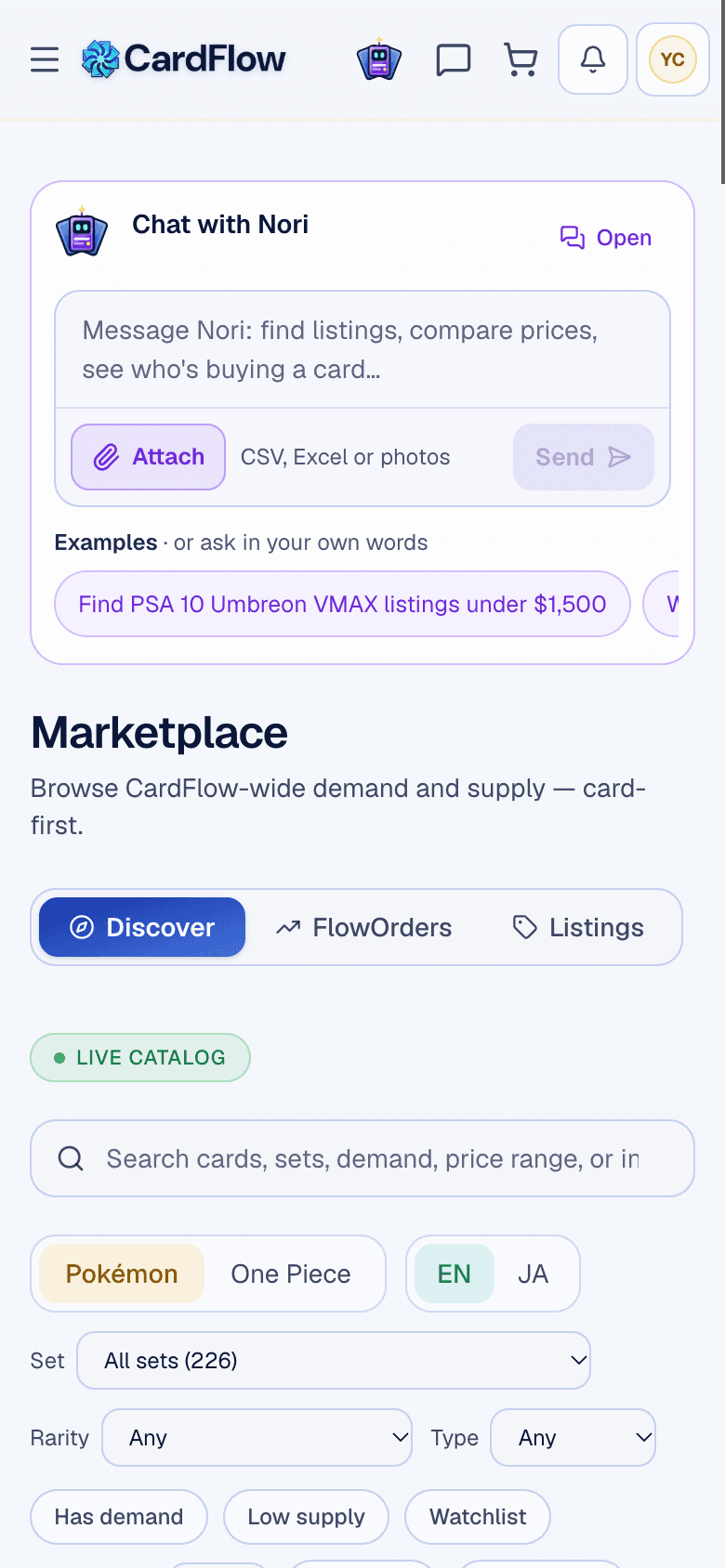
Captured from the live product in November 2026, on a demo account with sample inventory, at 1440px and 390px wide. Card artwork belongs to its respective rights holders.
01 / 04
Ask Nori
Nori answers in plain language from live CardFlow data, like a card's raw and graded prices, and turns requests into drafts: cards to add, offers to change, buyers to find. Nothing happens until a person confirms.
02 / 04
Inventory against live demand
Private inventory is valued at market and matched to open FlowOrders: the exact same printing, an open and payable bid, and a compatible condition or grade. Private inventory is never shown as public supply.
03 / 04
Buy lists at scale
Whole buy lists publish as live FlowOrders. Pro bids skip the upfront hold: the saved card is charged only when a match is accepted, within daily and monthly spend limits.
04 / 04
The whole market, card-first
Marketplace shows demand and supply across CardFlow: open FlowOrders, cards with offers, and the most-wanted sets, for Pokémon and One Piece in English and Japanese.
Interactive demo
Follow a FlowOrder from bid to payout.
Step through one FlowOrder as CardFlow runs it: the status each side sees, the exact messages buyers and sellers get, and where the buyer's money sits. Switch the seller to see how verified sellers skip review.
Who fills it?
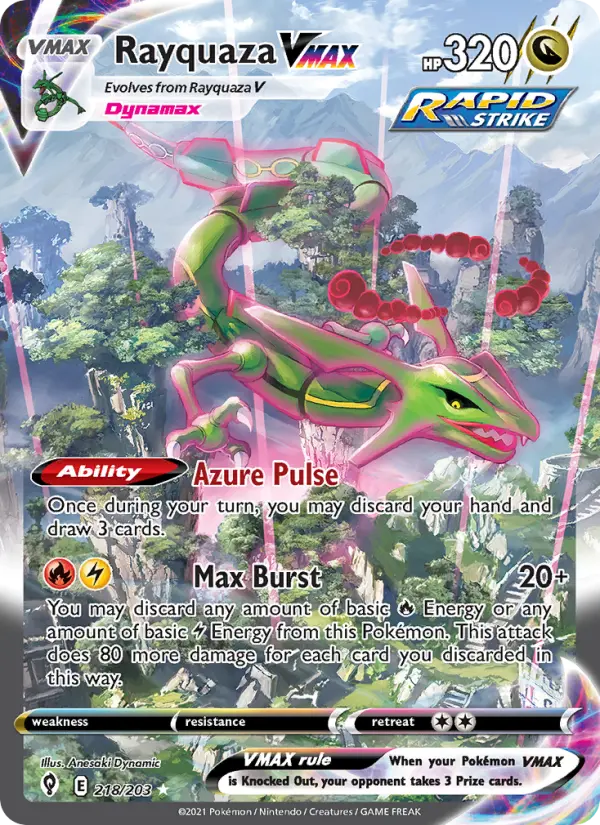
FlowOrder
Rayquaza VMAX
Evolving Skies · #218 · Near Mint
Buyer pays $550.80
OpenStep 1 of 7 · Buyer
FlowOrder Placed
Stripe places a hold on the buyer's card. Nothing is charged. FlowOrders stay open for 7 days, the longest Stripe will hold a card authorization.
Buyer sees
Your card is authorized, not charged — the hold captures only when a seller fulfills your FlowOrder. Open for 7 days, then it expires and the hold releases.
Funds
- Authorized
- Captured
- 48h hold
- Released
Statuses, messages, and rules from CardFlow's web app, mobile app, and API. Rayquaza VMAX is the example on CardFlow's own FlowOrders page, where its price is illustrative too. Card artwork belongs to its rights holders.
06 · Results & impact
Early traction, measured honestly.
The marketplace is live, with real users completing real transactions. In the first two weeks of CardFlow Pro's closed beta, 32 businesses onboarded and placed $800K in buy orders. Those are placed orders, not completed transactions.
32
Businesses onboarded
First two weeks of CardFlow Pro's closed beta.
$800K
Buy orders placed
First two weeks of the closed beta. Placed orders, not completed transactions.
~3,500
Registered marketplace users
Approximate count of registered accounts.
Live
Marketplace with real transactions
Completed transaction volume is still modest.
Outcomes
- Shipped a live marketplace across mobile, web, and a Django API, with payments and shipping handled end to end.
- Built a purchase flow where buyers commit funds up front and sellers are paid 48 hours after confirmed delivery.
- Extended the platform into CardFlow Pro, a trading desk for shops and vendors, now in closed beta.
- Led development of Nori, an AI copilot that drafts procurement plans but never spends on its own.
- Built a custom card-condition assessment model in PyTorch from data I collected and labeled, reaching 93% accuracy in my own manual evaluation.
Lessons
- 01Demand is only real when it's committed. Authorizing funds up front makes every FlowOrder a credible signal for sellers.
- 02Trust comes from mechanics, not messaging. Payment holds, automatic labels, and payouts after confirmed delivery protect both sides by default.
- 03Keep AI on a short leash where money moves. Nori drafts plans; people publish them.
Next case study
GananceLead iOS Engineer & Consultant